Blog
SLD Speed Limit: 90 km/h, Warning at 85 km/h | PasangSLD
Updated: July 2026 · Official source: JPJ portal
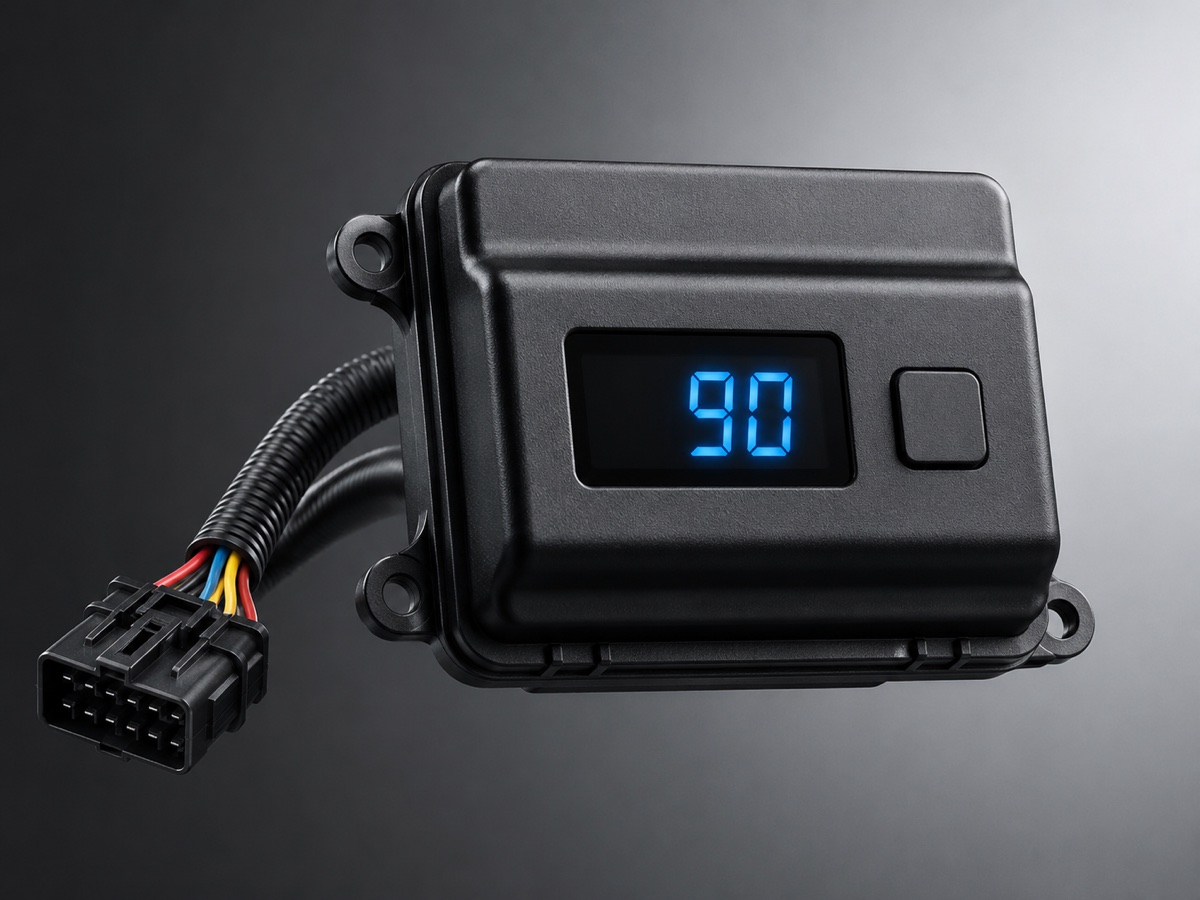
What speed is an SLD set at? Short answer: the speed limit device caps commercial vehicles at 90 km/h, with a warning at 85 km/h, under the UN R89 standard. This article explains how it works — ECU, sensors, modules — why 90 was chosen, and what an SLD does NOT do to your vehicle.
1. 90 km/h, Warning at 85 — Which Vehicles
The 90 km/h cap and 85 km/h warning are set under UN R89. Scope: goods lorries above 3,500 kg, buses (express, tour, factory, school), prime movers and trailers — an estimated 513,679 commercial vehicles in Malaysia.
Takeaway: check your vehicle category on the geran; if in scope, confirm your SLD status before the next PUSPAKOM inspection.
2. How an SLD Works
1. A sensor reads actual speed continuously 2. The signal goes to the ECU or a speed-limiting module 3. At 85 km/h — the driver gets a warning 4. At 90 km/h — the module holds back fuel supply; the vehicle cannot accelerate further
Vehicles from 2015 onwards: the function is usually already in the factory ECU (just verify it). Older ones: ECU activation or a retrofit module.
Takeaway: the year of manufacture decides whether you need verification, activation, or a retrofit.

3. Why 90 km/h?
It is not a random Malaysian choice — UN R89 is the international regulation for speed limit devices on heavy vehicles, adopted in many countries. Vehicles weighing tens of tonnes need far longer braking distances; 90 km/h balances logistics operations with safety. The 85 km/h warning gives a buffer so drivers adjust on their own instead of being cut off abruptly.
Takeaway: 90 km/h is a device setting, not a driving target — keep your speed suited to road conditions.
4. What an SLD Does NOT Do
— It does not interfere with the braking system — It does not restrict normal acceleration below 90 km/h — pickup, hill-climbing power and torque stay the same — It does not cut the engine abruptly — it only holds fuel supply from exceeding the limit — It does not stop you driving slowly; it is an upper limit, not a lower one
Vehicle feels 'weak' below 90 after installation? That is a calibration or wiring issue, not normal SLD behaviour.
Takeaway: do a test drive after installation; report anything odd to the workshop immediately.
5. ECU Activation vs Retrofit — By Phase
Phase 1 (1 Oct 2025): 2015 onwards — verify the function. Phase 2 (1 Jan 2026): pre-2015 — ECU activation. Phase 3 (1 Jul 2026): pre-2015 without ECU support — retrofit; full enforcement is deferred (Section 114 investigation notices are ongoing — 8,924 issued Oct 2025–Mar 2026; compliance around 15% as of Mar 2026).
After installation: the SLD Functionality Verification Slip (Slip Pengesahan Kefungsian — valid 2 years, checked at PUSPAKOM). Market: advertised RM400–600, real quotes can reach RM1,700–3,000. PasangSLD is an arranger — not on JPJ's official supplier list.
Takeaway: WhatsApp us your vehicle model, year and type — we match you with a JPJ-recognised workshop and give an honest estimate.
Summary — SLD Checklist
- Check your vehicle category and weight (scope: lorries above 3,500 kg, buses, prime movers).
- Identify the year of manufacture — 2015 onwards, or earlier.
- Determine the method: function verification, ECU activation, or retrofit.
- Test drive after installation — make sure performance below 90 km/h stays normal.
- Keep the Functionality Verification Slip (valid 2 years) for PUSPAKOM inspections.
- Compare full quotes, not just advertised prices.
- WhatsApp PasangSLD to arrange a slot with a JPJ-recognised workshop.
FAQ
What speed is an SLD limited to?+
90 km/h, with a warning at 85 km/h, under the international UN R89 standard. The limit applies to goods lorries above 3,500 kg, express/tour/factory/school buses, prime movers and trailers, plus related commercial vehicles.
Does an SLD affect braking or normal acceleration?+
No. An SLD only caps maximum speed by controlling fuel supply. Braking, acceleration below 90 km/h and hill-climbing power stay as normal. If performance suffers after installation, that is a calibration issue — take it back to the installing workshop.
My vehicle is pre-2015 — do I need a retrofit?+
It depends on the ECU. If the ECU supports the speed-limiting function, activation is enough (Phase 2, from 1 Jan 2026). If not, a retrofit module is required (Phase 3, from 1 Jul 2026 — full enforcement is still deferred). The workshop will check ECU compatibility first.
Is PasangSLD an official JPJ supplier?+
No — we are an arranger. JPJ publishes the official retrofit supplier list, and we arrange your installation with JPJ-recognised workshops. Check the official list on the JPJ website; we help handle the appointment and quotes.
Further reading
Questions about SLD? Talk to us
WhatsApp us — we confirm your vehicle’s requirement & arrange installation with JPJ-recognised workshops.
WhatsApp us